
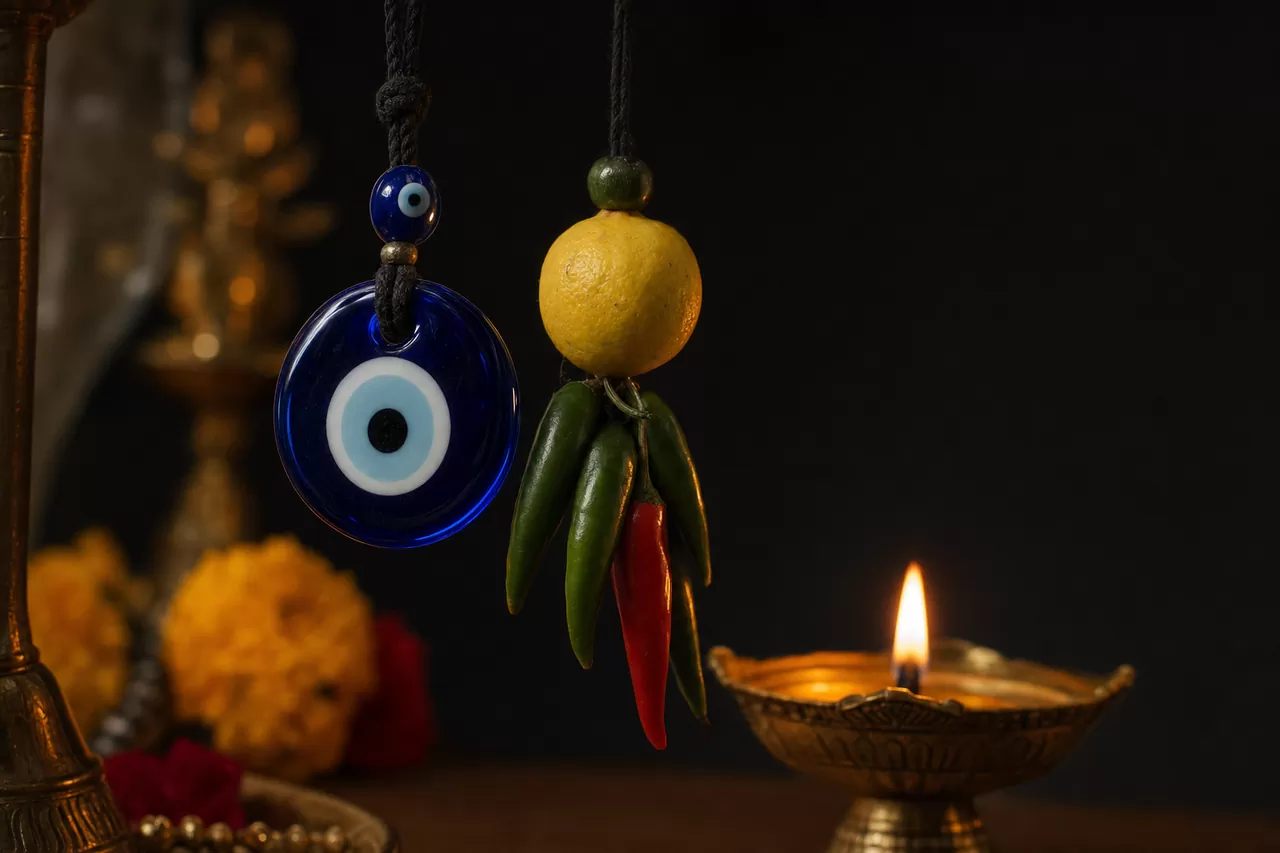
Sacred Service
Evil Eye & Nazar Removal
Nazar utarna and protection for families and businesses.
Learn more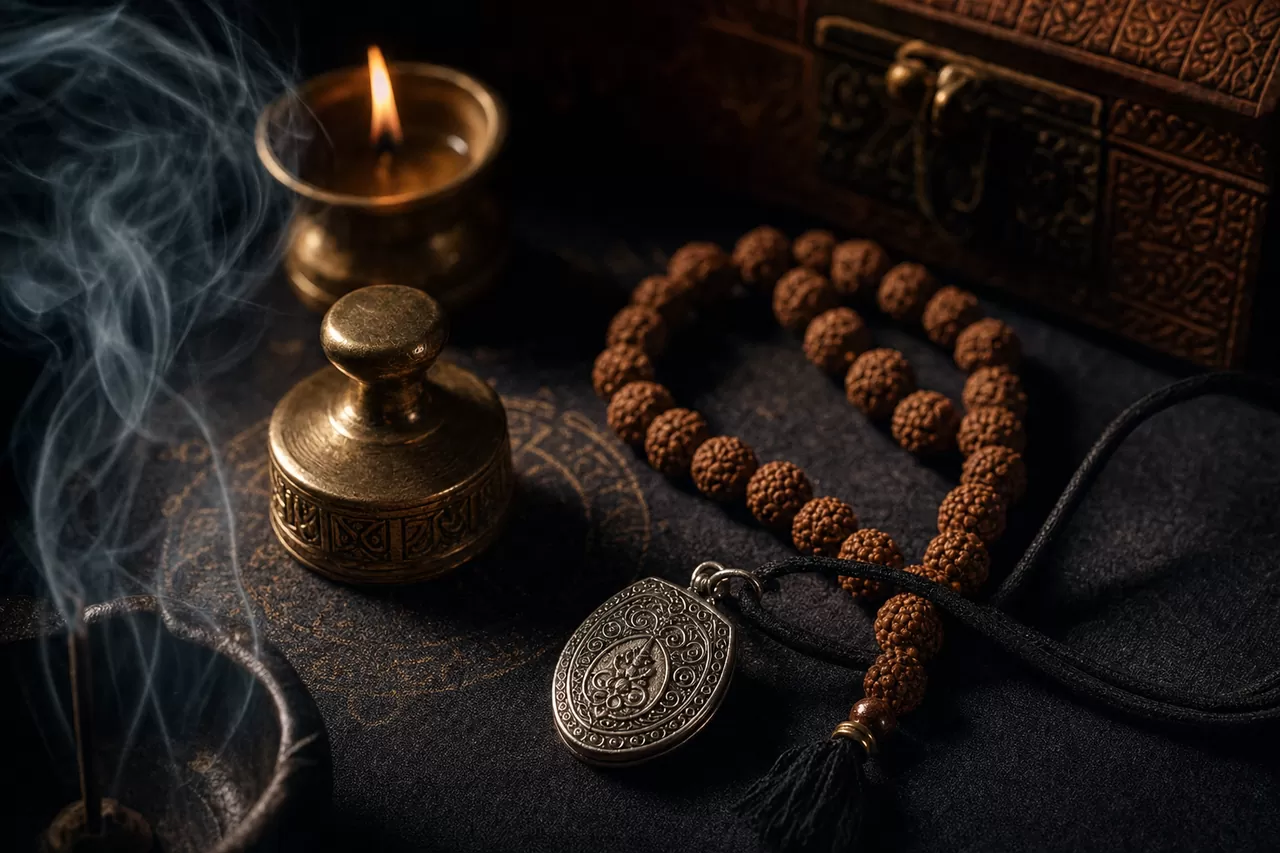
A kavach is a protective locket, thread or small yantra over which a chosen mantra is recited a set number of times, energised on a muhurat for one named person and then worn or kept close; many Hindi- and Punjabi-speaking families call the same thing a taweez. Master Vijay Ram prepares each one personally, only where a $50 consultation finds it warranted, from $250, agreed before it is made.
How it works
A Punjabi grandmother in Craigieburn wants something for her grandson before he flies to India for the first time. A nurse at Westmead wants protection she can carry on a ward where necklaces are not allowed, and a man in Salisbury has three amulets in a drawer from three different sellers and wonders whether any of them is doing anything. Each of them rings Master Vijay Ram with a version of the same question: what would actually help?
A kavach (the word means armour) is a protection of the Vedic tradition that is prepared by reciting a mantra many times over a locket of copper or silver, a red raksha sutra or a yantra drawn on bhojpatra, for one named person on an auspicious hour. Many families say taweez for the same thing; strictly, a taweez belongs to the Islamic tradition and carries written verses, and Muslim families are told plainly to have one written within their own faith. What Vijay Ram ji prepares is the Vedic kind, for people of any background who want it.
The chart comes first and the object second, and most people leave the consultation with a mantra and a practice rather than anything to wear. Where an object is warranted, it is made for one person, for one stated reason and for a stated period, which is the whole difference described in telling a real taweez from a fake. Nothing here promises that an amulet will keep trouble away; it promises that what you wear was prepared for you, honestly.
The Sacred Process
In plain words and in your own language: a hard period, fear after a frightening experience, a child starting school, a new shop, a long journey. Add the birth details of the person who will wear it, what has already been tried, and anything your work or school rules allow or forbid.
Vijay Ram ji reads the chart for the period running, the Moon and the planets under strain, and checks the ordinary causes before anything is suggested. Often a mantra and a short daily practice are enough; where an object is warranted, he names which one, what goes into it, the mantra, how long it is to be worn and the figure, from $250.
The recitation is done over the days the rite requires at his own place of practice in Auburn, ending on a muhurat with the wearer's name in the sankalp, and you can join the final puja by video. The kavach is then posted with written instructions or collected in person at Auburn.
The four objects are often mixed up, and the choice between them is mostly practical. The table sets out what each one is, how it is kept and who it tends to suit. Taweez, kavach and yantra compared goes further into the history of each.
| Object | Tradition | How it is kept | Usually suits |
|---|---|---|---|
| Kavach (locket or pendant) | Vedic; a mantra recited over copper or silver for one person | Worn on a cord, carried in a pocket or kept in a wallet | An adult in a hard period, a traveller, a worker who wants it close |
| Raksha sutra (kalava) | Vedic; a red cotton thread tied with a mantra | Tied loosely at the wrist and replaced when it frays | An older child, a student, anyone who cannot wear metal at work |
| Yantra | Vedic; a sacred diagram on copper or bhojpatra | Placed at the home altar or behind a shop counter, with a lamp nearby | A household, a new home, a shop or an office |
| Taweez | Islamic; verses or divine names written and sealed in a case | Worn at the neck or the arm | Muslim families, prepared by someone within their own faith |
For Muslim families the honest answer is the simplest: a taweez with Quranic verses should come from someone within Islam, and Vijay Ram ji says so rather than writing one himself. For everyone else, the question is which Vedic form fits the person's life, and that is usually decided by the job, the age and the habits of the wearer more than by anything mystical.
An object is rarely the first step. Where the worry is nazar on a child or a shop, evil eye and nazar removal usually comes first and the kavach follows as protection; where a reading finds something heavier, black magic removal is the remedy and the kavach is the aftercare.
The chart decides the mantra. A Saturn period usually calls for a Shani or Hanuman mantra, a troubled Moon for a Durga or Shiva kavach worn close, Rahu for a mantra that steadies the mind; the deity follows the chart rather than the client's favourite. The recitation is then done over the object for the count the rite requires, across several days, and completed on a muhurat with the wearer's name and gotra in the sankalp.
Many families ask for a Durga kavach to be energised in Navratri, and in 2027 Chaitra Navratri begins on Thu 8 Apr and Sharad Navratri on Fri 1 Oct in every Australian city; Navratri 2027 and the sadhana for protection sets out the nine nights. The final puja is performed personally by Vijay Ram ji at his own place of practice in Auburn, you can join it by video, and photographs or a short recording are sent afterwards only when he offers them. The work is booked in the same way as a puja performed on request.
The instructions are kept simple: wear it or carry it as told, keep it dry and clean, do not lend it, and say the short mantra given with it when you remember. Nothing goes around a baby's neck or into a cot, because a cord near a sleeping baby is a strangulation risk; a young child is given a loose thread on the wrist or a kavach kept at the family altar instead. At work, a pocket or a wallet does the same job as a cord, and no tradition asks anyone to break a hospital, kitchen or worksite safety rule.
The requests follow the families. In Melbourne's north, Indian households in Craigieburn, Epping and Roxburgh Park ask most often before a journey, a wedding or a child's first year at school, and black magic removal in Craigieburn describes how those conversations tend to begin with fear and end with something gentler. In western Sydney, Blacktown families and hospital staff at Westmead, who need something that fits a uniform, make up much of the rest; black magic removal in Westmead covers the rostered households of the health precinct.
Further away, the calls come from Canning Vale and Mandurah in Perth, from Salisbury and Mawson Lakes in Adelaide's north, from Brisbane's southside and from Darwin, where a kavach is best kept in a small sealed pouch through the wet season. The Adelaide consultation page explains how readings fit South Australian time. Every consultation is by phone, video or WhatsApp in English, Hindi or Punjabi, often with a parent in India on the same call to agree the choice.
The finished kavach is posted by tracked mail with its instructions, or collected in person at 25 Antwerp St, Auburn, the only place Vijay Ram ji sees anyone; he does not come to homes or shops. A yantra for a shop counter in Harris Park or Dandenong travels the same way, wrapped in its own cloth.
A consultation is $50, and it is where the chart is read and the object, if any, is chosen. Preparing and energising a kavach, raksha sutra or yantra, where it is warranted, starts from $250, including the recitation, the materials and the puja on the muhurat, and the figure is agreed before it is performed; if nothing is needed, nothing further is charged. There are no stronger versions at a higher price, no yearly renewal fee and no warning that harm follows if you take it off.
An amulet is a reminder, a boundary and a focus for practice; it is not a shield against a car on the motorway, an illness, a bad contract or a cruel relative. It will not make anyone love you, bend an employer or harm the person you fear, and Vijay Ram ji will not prepare one for those purposes, place one on someone without their knowledge or tell you who you need protecting from. No outcome is promised.
This is faith-based guidance, not medical, legal, financial or psychological advice. Fear that is stopping you sleeping or leaving the house belongs with a GP or a psychologist first, and Lifeline on 13 11 14 or Beyond Blue on 1300 22 4636 are there for distress at any hour. A seller anywhere who promised more than an object can deliver can be reported to your state's consumer affairs or fair trading office.
Good to Know
No. A taweez in the Islamic sense carries verses or divine names, and it should be written by someone within that faith, which is what Vijay Ram ji tells Muslim families who ask. What he prepares is a kavach in the Vedic manner, the protective locket many Hindi- and Punjabi-speaking families also call a taweez.
Gently, and with both parents agreeing. Nothing goes around a baby's or toddler's neck and nothing goes into a cot; a young child is given a loose red thread on the wrist, checked often, or the kavach is kept at the family altar for them. An older child can carry a small one in a school bag if the school allows it.
Carry it instead. A small kavach in a pocket, a wallet or a locker does the same work as one at the neck, and a wrist thread is kept for days off, since clinical areas usually require bare arms below the elbow. No tradition asks anyone to break a ward, kitchen or worksite safety rule, and Vijay Ram ji will not suggest it.
Yes, and a yantra is the usual form. It stands at the home altar or behind a shop counter with a lamp nearby, so nothing is nailed to a rented wall and nothing breaks a lease or a shopping-centre rule. Where the trouble seems tied to a new home, a griha pravesh or a cleansing may be advised first and the yantra afterwards.
By tracked post, with written instructions, once the final puja is complete. The muhurat is chosen for the wearer's own city, so Perth's two- or three-hour gap and Brisbane's hour in summer are allowed for, and you can join the final puja by video at your local time. Anyone near Sydney can collect it in person at Auburn instead.
A consultation is $50. Preparing and energising a kavach, raksha sutra or yantra, where the chart warrants one, starts from $250, and the exact figure is agreed with you before anything is performed. If no object is needed, nothing further is charged, and there are no stronger versions or renewal fees.
Nothing bad. Tell Vijay Ram ji, keep the mantra going, and he will say whether a replacement is warranted. A kavach is prepared for a period, not for ever; when that period has passed it is retired with thanks, buried in clean earth or returned to him, and anyone who says harm follows if you remove one is selling fear, not protection.
Explore More
Nazar utarna and protection for families and businesses.
Learn more
The signs read honestly first; removal only where it is warranted.
Learn more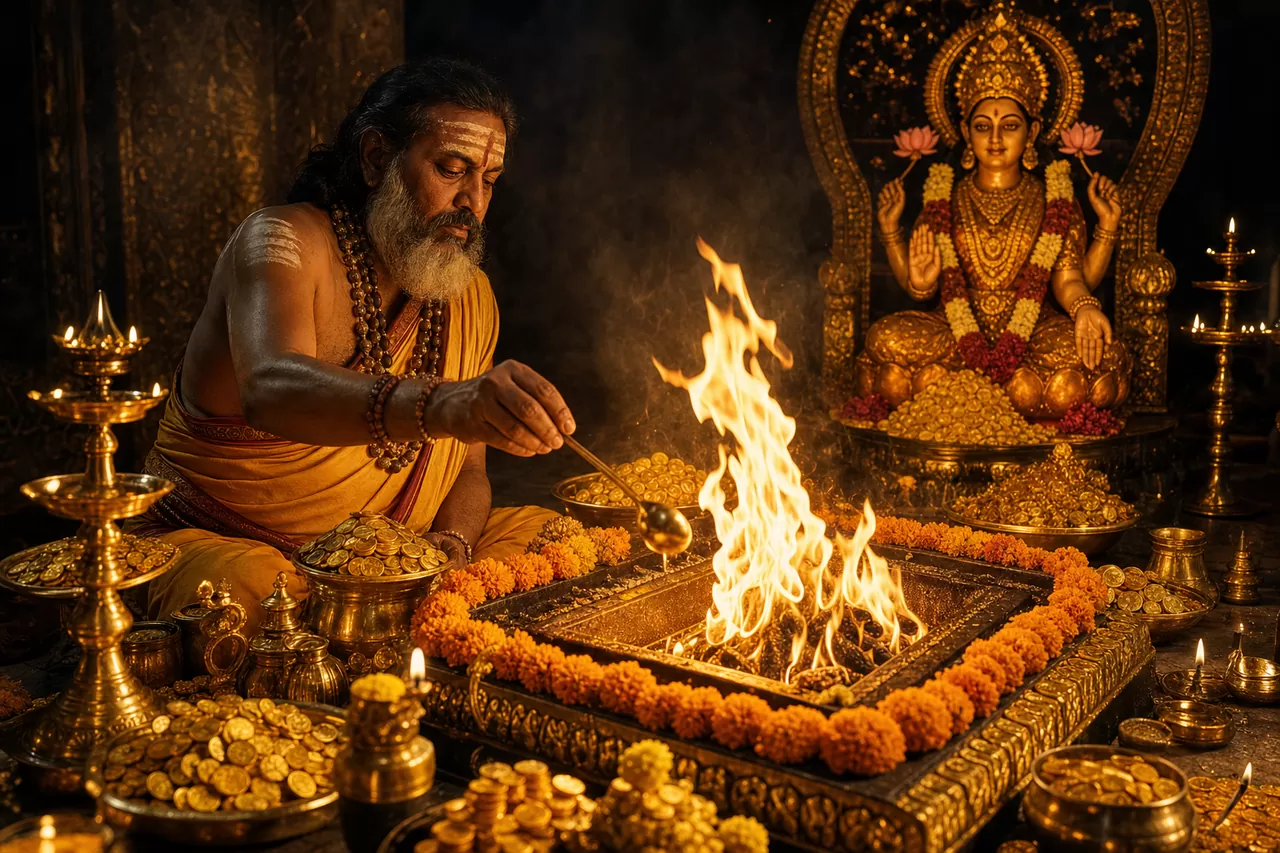
Puja and havan performed personally on request, from $250.
Learn moreFrom the Journal
Read before you book: what the work involves, what it costs and what it cannot promise.
Independent educational references — open in a new tab.
Prepared for One Person
A $50 consultation by phone, video or WhatsApp decides whether a kavach would help, which one and why; where it would, Master Vijay Ram prepares it himself at Auburn, with the figure agreed first.
Consultation $50
Share your concern in confidence. Vijay Ram ji replies personally, and what you send stays private.