

Quick answer
The conch is blown at the start of the aarti and the bell is rung to invite the deity, and with Om and kirtan they cleanse a Hindu home through sound rather than smoke. Keep the conch to daytime in a unit, skip it with breathing, heart or blood-pressure problems or in pregnancy, and use the bell and Om at any hour.
Why do Hindu homes use sound to cleanse?
Because in the tradition the right sound is itself purifying. Sound cleansing in a Hindu home is a practice that uses the conch, the puja bell, Om and devotional singing to mark a space as ready for worship, and it is as old as the lamp and the incense. The conch opens the aarti, the bell invites the deity, and the chanting fills the rooms with the names families have said for generations.
For many Australian households sound has become more than an extra: in a unit with a sensitive smoke alarm, or a home where someone has asthma, it is the cleansing that can be done without burning anything. Negative energy removal is the separate service for a house that stays heavy once the ordinary customs have been kept.
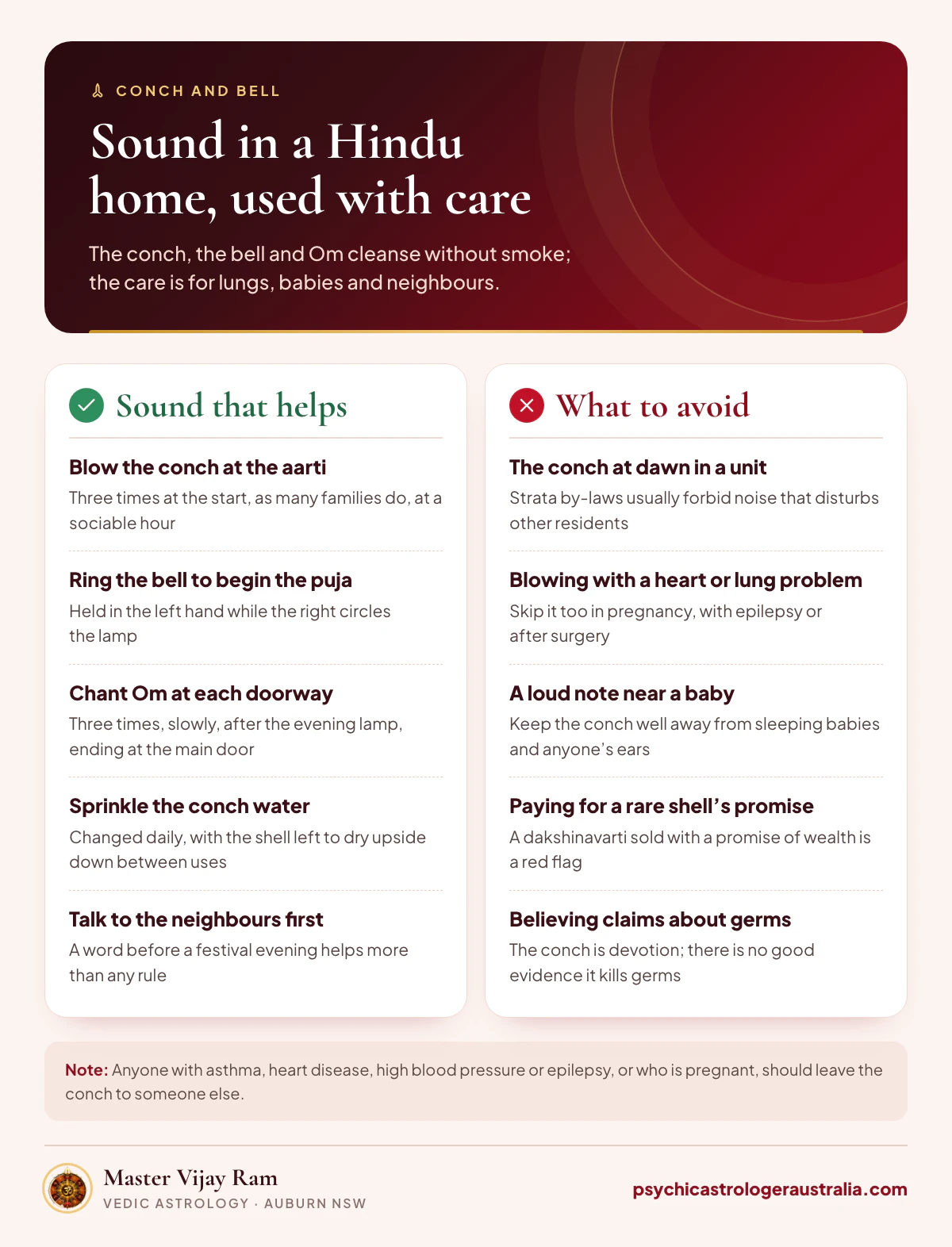
What is the shankha, and why is it blown?
The shankha is a conch shell, the shell of a large sea snail, blown like a trumpet through a hole at its tip. Vishnu holds one, Panchajanya, and at the opening of the Bhagavad Gita Krishna sounds Panchajanya before the battle, so the note is heard in the tradition as a call to attention and an announcement that something sacred is beginning.
At home it is blown at the start of the aarti, at a griha pravesh as the family crosses the threshold, and at weddings and festivals. In many Bengali households the women of the family blow it three times at dusk as the evening lamp is lit, a custom plenty of Bengali families in Australia still keep.
The conch shares Vishnu’s hands with the discus, and Narasimha, Sudarshana and Vishnu’s protective forms tells how the two sit together in his protective images.
Dakshinavarti or vamavarti: which conch is which?
Conches spiral in one of two directions. The vamavarti is the ordinary shell, the one that is blown at the aarti; the dakshinavarti spirals the other way, is rare, is associated with Lakshmi, and is kept at the altar for worship rather than blown.
Rarity invites fakes and fear-selling. Be wary of any dakshinavarti offered at a high price with a promise of wealth or protection attached, because a family that blows an ordinary vamavarti at its aarti has everything the custom asks for.
How do you blow a shankh at home?
Blowing a shankh at home takes a little practice. Press the lips firmly to the hole at the tip, keep them closed and buzz them as a trumpeter does, with a steady breath from the belly rather than puffed cheeks; the first attempts usually produce nothing but air, and the note comes after a few days of trying.
Many families blow it three times at the start of the aarti and return it to its stand afterwards. Rinse the mouthpiece before anyone else uses it, and never pass one conch round a room of guests without washing it between them.
Who should not blow the conch?
Blowing a conch means pushing hard against resistance, and it is not for everyone. Anyone with asthma or another breathing problem, heart disease, high blood pressure or epilepsy, anyone who is pregnant and anyone recovering from surgery should leave the conch to someone else, or ask their GP first; the bell and quiet chanting do the same work for them.
The note is also loud. Keep the conch well away from a sleeping baby and from anyone’s ears, and do not blow it in a small room beside an older relative who startles easily.
What is the water in the conch for?
A conch is also a vessel. In many homes and temples it is filled with water during the puja, and after the aarti that water is sprinkled over the family, the offerings and the rooms with the fingertips or a tulsi leaf; water offered from a conch is used in Vishnu’s abhishek as well.
Change the water daily and let the shell dry upside down between uses. Water left standing in a conch goes stale quickly in a warm Gold Coast summer, and the custom wants it fresh.
What does the puja bell mean?
The ghanta is rung at the start of a puja, and many families say a verse as they ring it: Agamarthan tu devanam, gamanartham tu rakshasam, kurve ghantaravam tatra, devatahvana lakshanam. It says the bell is rung to invite the gods and to send away the demons, and the sound is the sign that the deity is being called.
The ghanta in puja is usually held in the left hand while the right circles the lamp, and its handle often carries the deity’s vehicle, Garuda for Vishnu or Nandi for Shiva. In a temple each devotee rings the entrance bell on arrival, which is the same idea at the scale of a building.
How are Om and kirtan used to cleanse a home?
Om chanting is the simplest sound practice there is and needs nothing but a voice. Many families walk through the house after the evening lamp, stand in the doorway of each room and say Om three times, slowly, ending at the main door; others sit at the altar and chant for a few minutes while the house is quiet.
Kirtan and bhajan, devotional songs sung together with a harmonium, a dholak or small hand cymbals, do the same work on a larger scale and bring the family into one room. Where nobody sings, a recording of mantras or the Hanuman Chalisa played softly in the living room is how many households keep the custom, and many families find that enough.
How do the sound practices compare?
The table sets the four practices side by side, with the care each needs in an Australian home. None of them makes smoke, which is why they suit units and asthma households so well.
| Practice | When it is used | What it is said to do | Care in an Australian home |
|---|---|---|---|
| Shankha (conch) | Start of the aarti; griha pravesh; dusk in many Bengali homes | Announces the sacred and calls the household to attention | Loud: daytime and early evening only; skipped with breathing or heart problems |
| Ghanta (bell) | Start of every puja and through the aarti | Invites the deity and sends away what is unwelcome | Gentle enough for most units at a reasonable hour |
| Om | After the evening lamp, room by room, or at the altar | Settles the mind and the house | Quiet; suits everyone, shift workers included |
| Kirtan and bhajan | Weekly, or on festival evenings | Fills the house with devotion and gathers the family | Mind the volume and the hour in shared buildings |
How do you keep the neighbours on side?
Strata by-laws usually forbid noise that disturbs other residents, and councils limit noise late at night and early in the morning, so a conch at dawn in a Wollongong unit block is the quickest route to a complaint. Keep the conch to mid-morning or early evening, keep kirtan to a reasonable hour and volume, and close the balcony door while you sing.
A word with the neighbours before a festival evening goes further than any rule. Most people are curious rather than annoyed once they know a family is marking Diwali or a griha pravesh, and a plate of sweets across the hall is a better introduction than a notice from the strata manager.
Can sound replace smoke in a home that cannot burn anything?
For most purposes, yes. A family that cannot light loban or a camphor tablet because of a smoke alarm, a strata rule or a child’s asthma can ring the bell through the rooms, chant Om at each doorway and close with a short kirtan, and the house has been cleansed in the tradition’s own terms.
Smoke-free home cleansing for units and renters puts sound together with water, salt and light in a full routine, and camphor, loban and dhoop explains the smokes for homes where they are safe. In the daily rhythm the bell belongs with the evening lamp, as the home cleansing calendar shows.
What can sound not do?
The shankh benefits claimed online, from killing germs to strengthening the lungs or curing illness, have no good evidence behind them, and the tradition never needed them. The conch, the bell and Om are devotion: they mark time, gather a family and set a house in order for prayer.
They cannot fix damp, mould or a faulty gas heater, settle a dispute with the neighbours or lift a pattern that a chart shows. Treat them as worship and household custom, since nothing here is medical or legal advice, and nobody should pay extra for a shell or a bell sold with a promise.
When is more than sound needed?
When the bell has been rung and the lamp lit for weeks and the house still feels heavy, with damp, mould and the heater already checked, or when the trouble started on a date the family can name. That calls for a reading of the household’s charts rather than a louder conch, and for one person’s own steadiness aura cleansing is the related service.
Master Vijay Ram reads that for $50 in a phone, video or WhatsApp consultation, and plenty of calls end with nothing more than advice. Where a shanti is warranted, the puja begins from $250 with the fee agreed first, and he performs it himself at his place of practice in Auburn; online puja and havan explains how families join by video.
Households in Hobart, Adelaide and Canberra are read the same way, and an astrologer for Hobart families explains how sessions are arranged.
Read next
- A Home Cleansing Kit in Australia: What to Keep and What to SkipA home cleansing kit for Australian homes: the short list of puja items worth keeping, how to store them, where they …
- Camphor, Loban and Dhoop: The Hindu Home Cleansing Alternatives to SmudgingCamphor, loban and dhoop: what each does in a Hindu home cleansing, how the evening dhuni is done safely at home, and…
- Diwali 2026 House & Aura Cleansing: Clear the Year's Heavy EnergyDiwali 2026 house and aura cleansing done honestly: clean first, use the Five-Lamp Check, and learn when heaviness is…
Frequently asked questions
Can I blow a shankh at home?
Yes, most people can learn: press the lips to the hole at the tip, buzz them like a trumpeter with a steady breath, and blow at the start of the aarti, as many families do three times. It takes practice and it is loud, so keep it to daytime and early evening in a unit and away from babies. Anyone with breathing, heart or blood-pressure problems should leave it to someone else.
What is the difference between a dakshinavarti and a vamavarti shankh?
The two spiral in opposite directions. The vamavarti is the ordinary conch that is blown at the aarti; the dakshinavarti is rare, associated with Lakshmi, and kept at the altar for worship rather than blown. Rarity invites fakes, so be wary of any dakshinavarti sold at a high price with a promise of wealth or protection attached to it.
Why is a bell rung during puja?
The ghanta is rung at the start of a puja to invite the deity and, in the words of the traditional verse, to send away what is unwelcome. Many families recite Agamarthan tu devanam as they ring it. It is held in the left hand while the right circles the lamp, and in temples each devotee rings the entrance bell on arrival.
Who should not blow a conch?
Anyone with asthma or another breathing problem, heart disease, high blood pressure or epilepsy, anyone who is pregnant and anyone recovering from surgery should leave the conch to someone else or ask their GP first, because blowing it means pushing hard against resistance. The bell and quiet Om chanting do the same work in the tradition without any of that strain.
Is it okay to blow a conch in an apartment?
With care. Strata by-laws usually forbid noise that disturbs other residents, so keep the conch to mid-morning or early evening, never at dawn, close the balcony door and keep it brief. A word with the neighbours before a festival evening helps. If the building or a neighbour objects, the bell and Om chanting keep the custom quietly.
What is the water in a shankh used for?
During puja many families fill the conch with water and, after the aarti, sprinkle it over the household, the offerings and the rooms with the fingertips or a tulsi leaf; conch water is also used in Vishnu’s abhishek. Change the water daily, because it goes stale quickly in a warm house, and let the shell dry upside down between uses.
How do you chant Om to cleanse a house?
After the evening lamp, walk through the house, stand in the doorway of each room and say Om slowly three times, finishing at the main door, or sit at the altar and chant for a few minutes while the house is quiet. It needs no equipment, makes no smoke and disturbs nobody, which is why it suits units, shift workers and households with asthma.
Does blowing a conch kill germs?
There is no good evidence that it does, and claims that the conch cures illness or strengthens the lungs deserve caution. The shankha is devotional: it opens the aarti, announces a sacred moment and gathers the family. Hygiene, fresh air and a doctor do the medical work, and the conch sits alongside them as an act of worship.
Can a recording of mantras replace the bell and the conch?
For many families it does. Where nobody in the house sings or blows a conch, a recording of mantras, bhajans or the Hanuman Chalisa played softly after the evening lamp keeps the custom of sound in the home. Keep the volume low in a shared building, and add the bell at the start of the puja whenever you can.
People also ask
What are the benefits of blowing a shankh at home?
In the tradition the conch announces that worship is beginning, calls the household to attention and is said to clear the space for the deity. Those are devotional benefits. Claims that it kills germs or cures illness have no good evidence behind them, and anyone with breathing, heart or blood-pressure problems, or who is pregnant, should skip it.
What does the puja bell signify?
The ghanta signifies the beginning of worship: it invites the deity and, in the traditional verse, sends away what is unwelcome. Its sound gathers attention, and its handle often bears the deity’s vehicle, Garuda for Vishnu or Nandi for Shiva. Ringing it at the start of every puja is one of the simplest sound practices a home can keep.
How can I cleanse my house with sound?
Ring the puja bell through each room after the evening lamp, chant Om three times at each doorway, finish at the main door, and sing or play a bhajan softly if you like. Keep the conch for the aarti at a sociable hour. Sound makes no smoke at all, so it suits units, renters and households where someone has asthma.
When should a conch be blown?
At the start of the aarti, at a griha pravesh as the family crosses the threshold, at weddings and festivals, and in many Bengali homes three times at dusk with the evening lamp. In an Australian unit keep it to mid-morning or early evening rather than dawn, and keep it brief, so the neighbours hear a custom rather than a disturbance.
References & further reading
Serving clients across Australia
Confidential consultations by phone, video & WhatsApp — including: