
Quick answer
Many families believe objects keep an impression of their owners, most of all beds, shoes and clothes. The tradition clears it with ordinary care: check for bed bugs, mould and safety recalls, clean the piece, give it a day of sun, a little salt or Gangajal and a prayer, then use it. Nobody needs to pay to have a find cleansed.
Do objects carry energy?
The idea that objects carry energy is a folk belief that things keep an impression of the people who owned and used them, strongest in whatever touched the body: a bed, a pair of shoes, a comb, a ring. Many Indian families hold it quietly, and it surfaces the moment a teak sideboard arrives from Facebook Marketplace or a grandmother sees the op-shop label on a child's jacket.
Traditions differ on how much weight to give it. Some families will not bring a stranger's bed or shoes into the house at all, others wash and use everything, and most sit in between, with a simple cleaning custom that settles the question.
So, do objects carry energy? The tradition says they can hold an impression; it also says that impressions are cleared with ordinary care and a prayer, and negative energy removal is for a household that has gone wrong, not for a chest of drawers.
Which second-hand things worry families most?
The worry follows intimacy. A mattress someone slept and perhaps fell ill on, shoes shaped to another person's feet and clothes worn against another body raise more unease than a bookcase or a dining table.
| The object | The folk worry | The practical check first | A simple cleansing |
|---|---|---|---|
| Mattress or upholstered bed | Sleep, illness and intimacy soak into it | Bed bugs in the seams, stains, a musty smell; new is often wiser | A day of sun, a fresh protector, a prayer at first use |
| Bed frame, wardrobe, timber furniture | The previous household's quarrels | Mould in drawers and backs; loose joints; old paint | Wiped down, aired, a bowl of salt beside it overnight |
| Shoes and clothes | Worn against another body; some families link shoes with Shani | Fit, wear and hygiene | Washed hot, dried in the sun |
| Cots, prams and car seats | A baby's things from a stranger | Safety recalls, missing parts, unknown crash history for a car seat | Cleaned, then blessed with the family's own prayer |
| Jewellery and metal pieces | The owner's fortune clings to them | Authenticity and condition | Washed in clean water with a few drops of Gangajal |
| Deity images and religious objects | Sacred things should not be bought and sold casually | Where an old piece came from | Cleaned gently and given a respectful place, or taken to a temple |
In every row the practical column comes before the last one. Most families who do the practical check properly find the cleansing is the easy part.
What should be checked before anything spiritual?
Bed bugs come first, because they travel in mattresses, bed frames and upholstered chairs and are miserable to remove. Look along seams and joints for tiny dark spots or the insects themselves before anything comes through the door, and leave the piece outside if in doubt.
Then mould and damp: a musty smell inside drawers or a bloom on the back of a wardrobe means the piece spent time somewhere wet, and the real causes of a heavy house, mould among them, are not improved by bringing more of it inside. Old painted furniture may carry lead-based paint, so it is not sanded indoors without proper precautions.
Anything for a baby is checked against the product safety recall lists before it is used. A second-hand car seat with an unknown history is the one item many families simply buy new, whatever the price tag says.
How do you cleanse a second-hand object simply?
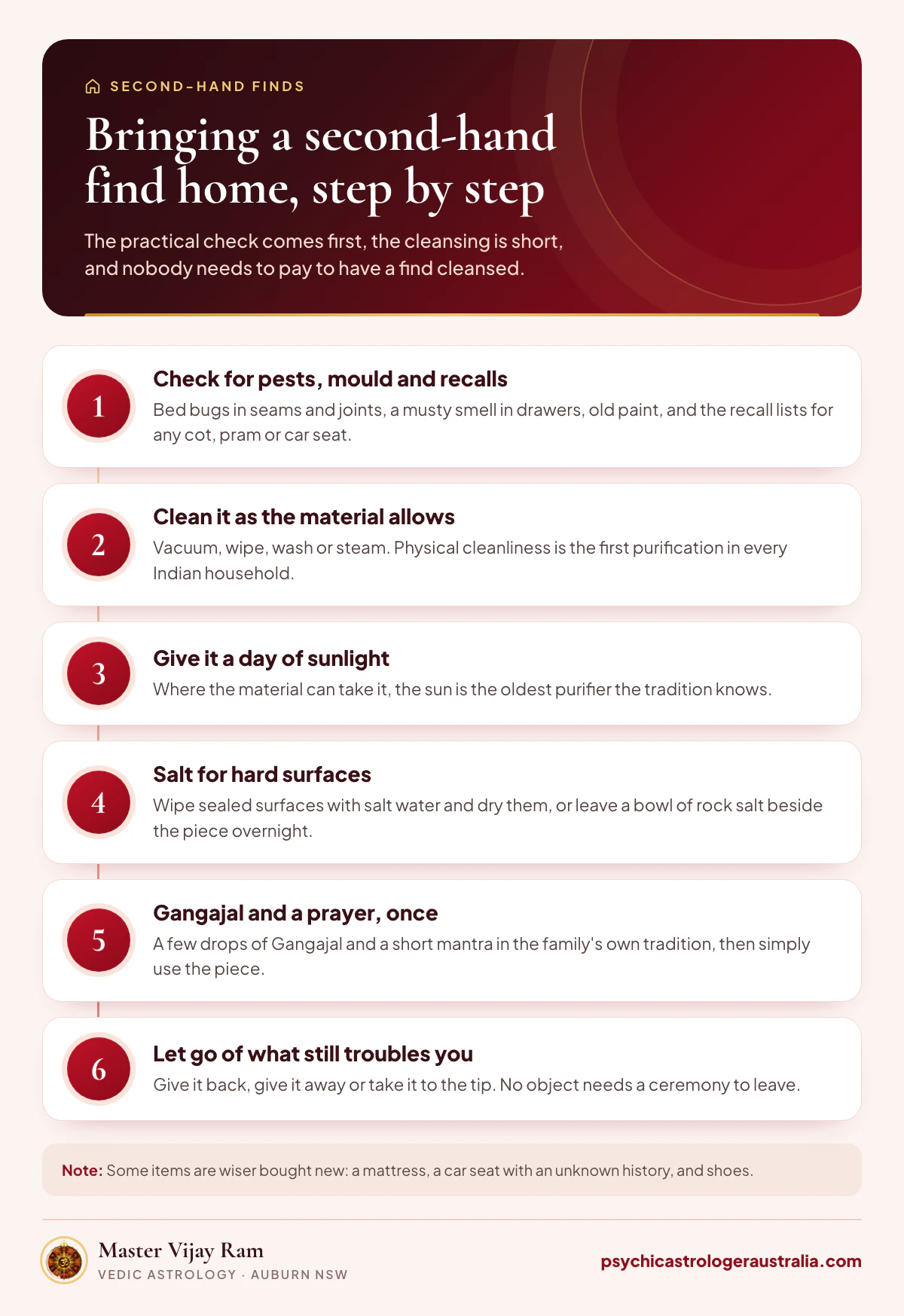
Clean it properly first: vacuum, wipe, wash or steam as the material allows, because physical cleanliness is the first purification in every Indian household. Then give it a day of sunlight where the material can take it, the oldest purifier the tradition knows and the one grandmothers trusted most.
Salt and water suit hard, sealed surfaces, but salt water can mark polished timber and corrode metal, so wipe, then dry, or simply set a small bowl of rock salt beside the piece overnight and throw the salt away in the morning. A few drops of Gangajal sprinkled with a mango or tulsi leaf, and a short mantra in the family's own tradition, finish it.
Then use the thing. Cleansing second-hand furniture is complete when the object has been cleaned, aired and prayed over once, and repeating the ritual every week turns a custom into an anxiety.
Are op-shop and kerbside finds any different?
An op-shop find has usually passed through a volunteer's hands and a shop floor; a kerbside find from a council clean-up has often sat out in the rain overnight. The second deserves the stricter check for damp, pests and broken parts before it comes anywhere near the house.
Spiritually they are the same, and so are family hand-me-downs, the gentlest case of all, since the impression they carry is a cousin's or an aunt's. Buying and passing things on is a good habit for many families: money saved, a charity supported, nothing wasted.
Does vastu care where furniture came from?
Vastu cares where a piece goes, not where it came from. A heavy wardrobe belongs against a south or west wall, the bed is placed so the head points south or east, and the north-east is kept light and uncluttered, whether the furniture came from a showroom or a garage sale.
A vastu reading of the floor plan can place a large second-hand piece well in a small unit. What it will never do is declare a sound table unlucky because of its previous owner.
What about a stranger's bed or shoes?
These are the two objects families most often refuse, and the refusal has sense in it. A used mattress is hard to clean thoroughly and may carry pests, and second-hand shoes are shaped to someone else's feet; buying both new is a reasonable choice that needs no spiritual justification.
A good timber bed frame is a different matter. Cleaned, aired and fitted with a new mattress, it becomes the family's own bed, and many households mark the first night with a lamp and a prayer.
An antique with a deity on it: how should it be treated?
A brass Ganesh from an antique shop, a painted Krishna from an estate auction or a temple bell from a market stall deserves respect whoever owned it before. Clean it gently with water and a soft cloth, never place it on the floor, and decide whether it will be worshipped at the home shrine or kept as a respected object at eye level, away from bedrooms and bathrooms.
Worry about antique negative energy is often really worry about provenance. Very old temple images are sometimes stolen from shrines and sold abroad, so a genuinely old piece should come with a clear account of where it has been. A chipped or broken image is a separate question, and old idols and broken murtis explains what families do with one.
Things from a deceased stranger's estate?
Estate sales and auctions are full of good furniture and, for some families, a particular unease. The rites after a death belong to the departed's own family; a buyer's part is a clean, a quiet word of thanks to whoever owned the piece, and then ordinary use.
Your own family's belongings after a loss are a different and more tender matter, and a loved one's belongings after death covers what to keep, give and cleanse. Personal papers or photographs found in a bought drawer are best returned through the auction house or the seller.
A used car, a used phone?
A second-hand car is blessed in the same way as a new one, once it has passed a mechanical inspection, and energy cleansing for a car, shop or rental describes the custom. A used phone or laptop needs a factory reset and a clean, and nothing else.
Should you ever pay to have an object cleansed?
Rarely, and never because someone has frightened you. Be wary of a seller who says a piece is cursed and offers a "cleansed" one at a premium, or of anyone who tells you an object you own is haunted and names a price to clear it. Telling someone they are cursed and charging to lift it can amount to misleading or unconscionable conduct under consumer law, and your state's fair trading office will hear the complaint.
The cheapest remedy for an object that troubles you is to let it go: give it back, give it away or take it to the tip. No object is worth a household's peace, and none needs a ceremony to leave.
Could the object really be the problem?
Only rarely. A reading is worth having when a household's trouble clearly began the day something arrived, has outlasted the clean, the sunlight and the object's removal, and keeps a pattern the family can date; most such calls end with an ordinary explanation and the advice to sell the piece if nobody likes it.
Consultations are $50. A household puja, where a reading genuinely calls for one, costs from $250, with the amount agreed before Master Vijay Ram performs it in Auburn, and how a performed puja works describes the rest.
Objects are not posted to him. A family on the Central Coast, an easy trip to Auburn can bring a worrying piece to an appointment, and families in Darwin or Perth describe it by video.
What a cleansing cannot do for an object
It cannot remove bed bugs, kill mould, make an unsafe cot safe or prove where an antique came from. Those are jobs for a pest controller, a cleaner, the recall lists and a reputable dealer, and they come first.
This is faith-based guidance from Vijay Ram ji, not medical, legal or financial advice, and a cleansing carries no promise of any result. To cleanse old objects well is mostly to clean them well, say a prayer once, and get on with enjoying a good find.
Read next
- How to Cleanse a Business or Office of Heavy EnergyHow to cleanse a business or office of heavy energy: rule out the ordinary causes, keep a daily practice at the thres…
- House Cleansing for Negative Energy: A Room-by-Room Vedic GuideA room-by-room Vedic guide to house cleansing for negative energy: what to rule out first, what is safe to do yoursel…
- Navratri & Dussehra 2026: Cleanse Your Home of Negative EnergyNavratri and Dussehra 2026 land in an Australian spring. Here is what a home cleansing can honestly do at festival ti…
Frequently asked questions
Is it bad luck to buy second-hand furniture?
No. The folk belief that objects keep an impression of their owners is real in many families, but the tradition clears it with ordinary care: a proper clean, a day of sunlight, a little salt or Gangajal and a short prayer. Vastu cares where a piece is placed, not where it came from. A sound table from a garage sale is simply a table.
Should we buy a second-hand mattress?
Many families prefer not to, and the reasons are practical as much as spiritual. A used mattress is hard to clean thoroughly and can carry bed bugs, which are miserable to remove. A good second-hand bed frame is different: inspect the joints for pests, clean it, fit a new mattress, and mark the first night with a lamp and a prayer if you wish.
How do I cleanse something from an op shop?
Clean it as the material allows, by washing, wiping, vacuuming or steaming. Give it a day of sunlight if it can take it. Wipe hard, sealed surfaces with salt water and then dry them, or set a bowl of rock salt beside the piece overnight. Sprinkle a few drops of Gangajal, say a short mantra once, and start using it.
Can I keep an antique statue of a Hindu deity bought at a shop?
Yes, with respect. Clean it gently with water and a soft cloth, never put it on the floor, and either worship it at the home shrine or keep it at eye level away from bedrooms and bathrooms. If the piece is genuinely old, ask the dealer where it came from, because old temple images are sometimes stolen from shrines and sold abroad.
Is it wrong to wear second-hand shoes or clothes?
Not wrong. Some families avoid a stranger’s shoes, and some link shoes with Shani, but that is folk custom rather than a rule. Clothes washed hot and dried in the sun are ready to wear. Second-hand shoes are shaped to someone else’s feet, which is a practical reason many people buy shoes new.
A seller says an antique is cursed and offers a cleansed one. What should I do?
Walk away. Selling fear is a sales tactic, not a tradition, and charging to lift a curse you were told about can be misleading or unconscionable conduct; NSW Fair Trading and its counterparts in other states accept complaints. If an object you own troubles you, the cheapest remedy is to give it away.
Something came into the house and things went wrong. Is it the object?
Usually it is coincidence, or a practical problem such as mould or pests arriving with it. Remove the object for a fortnight and see whether anything changes. If a household pattern began on that day, outlasts the object’s removal and can be dated, a $50 consultation reads the household’s charts against the date; most such calls end with an ordinary explanation.
Can I send an object to Master Vijay Ram to be cleansed?
No; objects are not posted to him. Most finds need only the simple home cleansing. If a piece genuinely worries the family, it can be brought to his place of practice in Auburn by appointment, or shown on a video call. A household puja, offered only when a reading calls for one, costs from $250 and its fee is agreed first.
People also ask
Can objects hold negative energy?
Many traditions, Indian folk belief among them, hold that objects keep an impression of their owners, especially things that touched the body. The Vedic answer is calm: a proper clean, sunlight, a little salt or Gangajal and a prayer clear it. Physical problems such as mould and pests matter more and are checked first.
How do you spiritually cleanse second-hand furniture?
Check it for bed bugs and mould first, then clean it thoroughly. Air it in the sun for a day if the material allows, wipe sealed surfaces with salt water and dry them, or leave a bowl of rock salt beside it overnight. Finish with a few drops of Gangajal and a short mantra, once, and then use it.
Is it okay to buy furniture from someone who died?
Yes. The rites after a death belong to the departed’s own family, and a buyer’s part is a clean, a short prayer for the previous owner’s peace, and ordinary use. Personal papers or photographs found inside are best returned to the family through the seller or the auction house.
What should you not buy second-hand?
For practical reasons many families buy mattresses, car seats and shoes new: mattresses can carry bed bugs, a car seat may have unknown crash damage, and shoes are shaped to someone else’s feet. Check any cot or pram against the product safety recall lists. Almost everything else can be cleaned, cleansed and used.
References & further reading
Serving clients across Australia
Confidential consultations by phone, video & WhatsApp — including: