
Quick answer
After a hospital stay the discharge plan comes first: medicines, follow-up appointments and the warning signs to watch. Gentle cleansing then means a fresh, clean, smoke-free room for the patient, a recovery sankalp and daily prayer such as the Mahamrityunjaya mantra, short visits, and real rest for the carer. A thanksgiving puja waits until the patient is well.
What comes first when someone comes home from hospital?
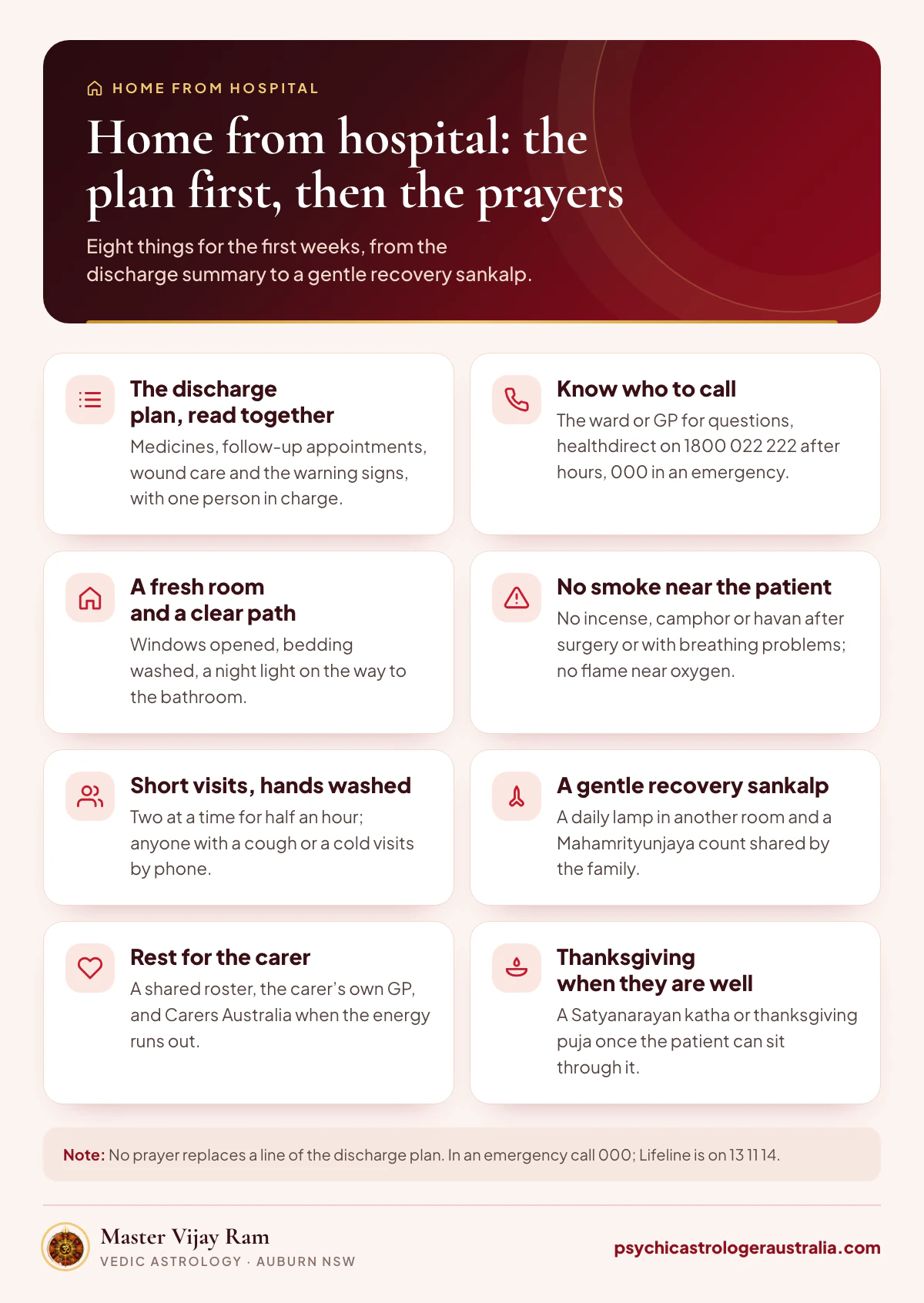
The discharge plan. A discharge plan is the written plan that the hospital gives you for the weeks after you leave: the medicines and when to take them, the follow-up appointments with the GP or specialist, how to care for a wound, drain or catheter, and the warning signs that mean ringing the ward, the GP or 000. Read it together before anything else is planned, and make sure one person in the family owns it.
Book the GP appointment the summary asks for, fill the new prescriptions and throw nothing out until the GP has reviewed the old ones. For questions after hours, healthdirect is on 1800 022 222, and in an emergency the answer is always 000.
Master Vijay Ram says this before any prayer is discussed, and Vedic health and wellbeing is built on the same order: medical care first, then the chart and the remedy beside it. Everything below assumes the plan is in hand.
What does gentle cleansing mean for a patient and a house?
Spiritual cleansing after illness means less than families sometimes fear, and more practical work than they expect. For the patient it means a shower when the wound instructions allow, clean clothes, their own bed and their own prayers. For the house it means a fresh room, clean linen, quiet, and a daily lamp and prayer in a place that does not tire the person recovering.
Families sometimes speak of the heaviness of a hospital, and worry about negative energy after a hospital stay. What a patient usually carries home is exhaustion, pain and the smell of the ward, and a shower, a clean room and sleep answer most of it. Nothing needs to be circled, burnt or performed over someone who is still healing.
How should the patient’s room be prepared?
Open the windows for an hour before they arrive, wash the bedding, and clear a path from the bed to the bathroom wide enough for a walking frame, with a night light on the way. Put water, tissues, the phone charger and the medicines list within reach, and the medicines themselves somewhere the patient and any visiting grandchildren cannot confuse.
Wash the clothes from the hospital bag and wipe the bag itself; many families find that this small act is the moment the stay feels over. Fresh flowers are lovely, unless the patient has asthma or hay fever, in which case a photograph of the family or a small murti on the bedside table does the same work.
Is a lamp, incense or a havan safe after surgery?
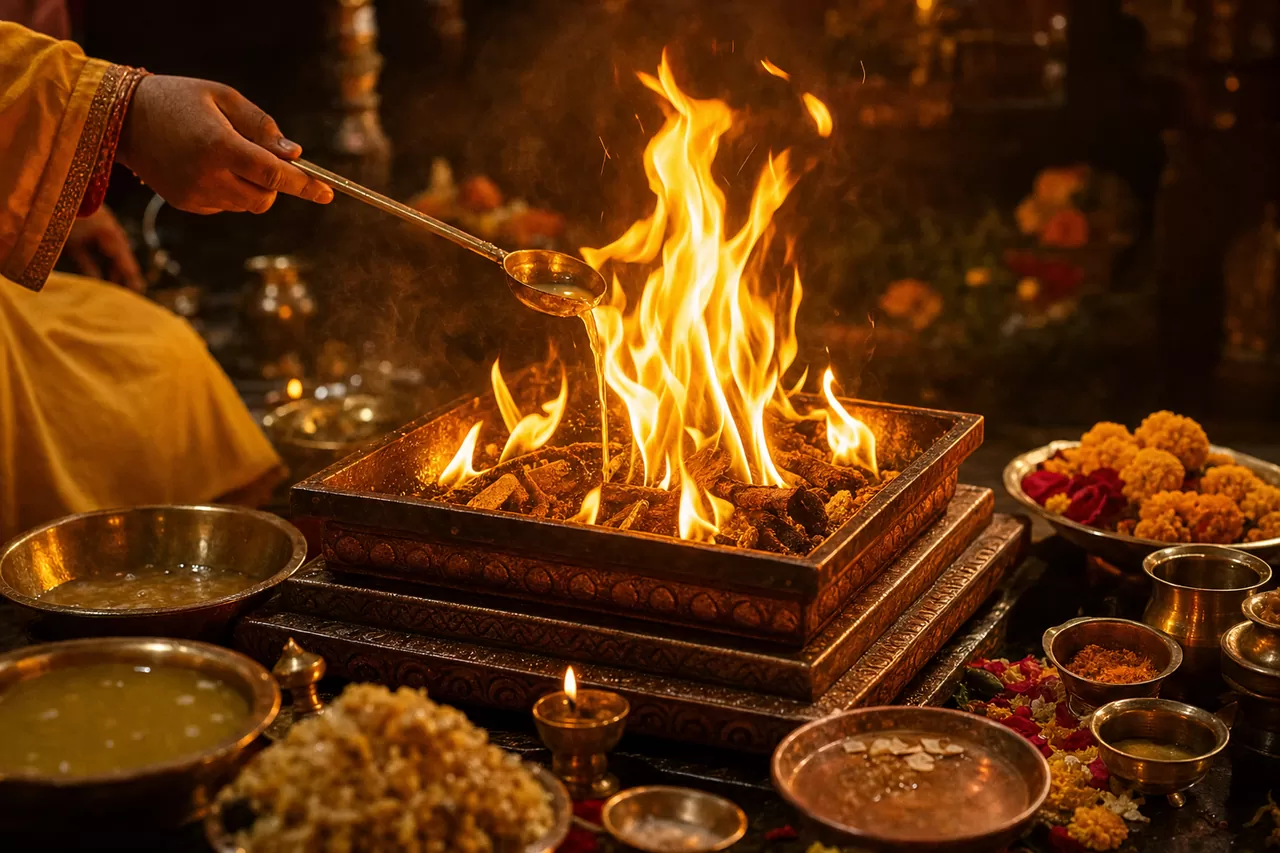
Not in the patient’s room. No smoke, incense, camphor or havan near anyone with breathing problems or who has just had surgery, and the evening lamp is lit in another room, watched, or replaced by a battery diya at the bedside. Incense smoke can trigger asthma, and a cough after chest or abdominal surgery is painful as well as unhelpful.
If the patient comes home on oxygen, no flame of any kind goes near it, ever, and the supplier’s instructions will say the same. Smoke alarms stay on whatever the custom, and smoke-free home cleansing describes the practices that keep the tradition without the smoke.
What is a recovery sankalp?
A sankalp is a stated intention, made before a prayer or a vow, that names the person, the purpose and what the family will do. A recovery sankalp might be a daily lamp for forty days, a count of the Mahamrityunjaya mantra shared between relatives, a temple visit once the patient can walk there, or a gift to people in need when they are well.
Keep the vow gentle. A carer who fasts through the week of a parent’s discharge, or who stays up chanting after a night shift, is making recovery harder for two people, and the tradition does not ask for that. Many families choose a vow that the patient can share in once they are stronger, which turns the prayer into something done together.
How does the Mahamrityunjaya mantra fit in?
It is the prayer many families reach for first in illness: a verse of the Rigveda addressed to Shiva as Tryambaka, asking for a gentle release from death and the fear of it. Families chant it at a fixed hour, often in the morning after a bath, and offer the count for the patient’s recovery, at home or quietly at the bedside.
The Maha Mrityunjaya mantra explained covers the words, the count and how to chant it for someone else. Here it is enough to say that a short count kept daily by the family is the heart of much prayer for recovery in Hindu homes, and that it is said beside the medicine, never in place of it.
Does a donation help, and what kind?
Many families give something in the patient’s name, a custom of daan that the tradition treats as part of the prayer. Food to a temple kitchen, a gift to a charity that cares for the sick, or, for those who are eligible, giving blood are all in the spirit of the custom, and a thank-you card to the ward that looked after them is a kind of daan as well.
Keep the gift to what the family can afford. A donation is an offering, not a payment for an outcome, and nobody should be told that a recovery depends on its size.
Visitors: how many, and how long?
Fewer and shorter than the family instinct suggests. In many Indian families visiting the sick is a duty, and a patient home from hospital can find twenty relatives in the lounge by the weekend, each with food the dietitian has not approved. A roster helps: two visitors at a time, half an hour, hands washed at the door, and anyone with a cough or a cold visiting by phone instead.
For a patient after chemotherapy or a transplant, the treating team’s advice on visitors and food comes before any custom. Relatives who want to help can be given jobs instead of chairs: a meal that fits the diet sheet, a lift to the follow-up appointment, an hour with the patient so the carer can sleep.
What about the carer?
The carer is the person most families forget. A daughter in Gosford whose father has come home after a heart operation, or a husband in Darwin whose wife has left Royal Darwin Hospital after a long stay, is often running the medicines, the appointments, the visitors and a job at once, and running out of sleep. The tradition’s word for this is seva, and it was never meant to be done alone.
Share the roster, accept the help that is offered, and see your own GP if sleep, appetite or mood have gone. Carers Australia exists for exactly this, Lifeline is on 13 11 14 for anyone who is struggling, and when to see a doctor first sets out the signs that should not wait.
The first week home: whose job is what?
The table sets the hospital’s plan beside what the family adds. The left column always comes first.
| Area | From the discharge plan | What the family adds |
|---|---|---|
| Medicines | The list, the doses and the times; new prescriptions filled | One person in charge of the list; a dosette box |
| Appointments | The GP or specialist follow-up booked | A lift there and someone to take notes |
| Wound or drain | The care instructions and the warning signs | Clean towels and a calm bathroom routine |
| The room | Mobility advice, equipment and aids | Fresh air, clean linen, a clear path, no smoke |
| Visitors | Any infection or diet limits | A roster, short visits, hands washed |
| Prayer | Nothing that conflicts with care | A sankalp, a daily count, a lamp in another room |
When is a puja or a jaap right?
Once the medical side is settled, some families want more than the household prayer: a Mahamrityunjaya jaap with a set count, a graha shanti for the planet the chart shows under strain, or a thanksgiving puja once the patient is back on their feet. A recovery puja of the thanksgiving kind is often a Satyanarayan katha, held when the patient can sit through it and enjoy the prasad.
A chart reading can describe the season the patient is in and the planets the tradition reads for health, such as the sixth house and its lord, as the sixth house and health explains. It describes tendencies and timing only. Master Vijay Ram never forecasts whether or when someone will recover, and anyone who does is selling fear.
How does Master Vijay Ram help, and what does it cost?
A $50 consultation, by phone, video or WhatsApp and in Hindi, Punjabi or English, reads the patient’s chart beside the family’s questions and suggests a home practice that fits the recovery. Families from the Central Coast to Perth talk to him the same way, and the patient need not join the call.
Where a jaap or a graha shanti puja is warranted, he performs it himself at his place of practice in Auburn on a chosen muhurat, starting from $250 and agreed before it is performed, with the family watching by video if they wish. Online puja and havan explains what is included; nothing is done at the hospital or the patient’s bedside.
What can prayer not do after a hospital stay?
It cannot replace a single line of the discharge plan, change a dose, heal a wound faster or stand in for the GP review. The mantra, the lamp and the puja are faith, offered as guidance and comfort, and they work best in a house where the medicines are right and the carer is sleeping.
What they can give is a rhythm for the long days of recovery, and a way for a scattered family to feel that it is doing something together.
Read next
- Signs of Negative Energy in Your Home & How to Clear ItSigns of negative energy in a home, the ordinary causes to rule out first, and how nazar, heavier interference and me…
- House Cleansing for Negative Energy: A Room-by-Room Vedic GuideA room-by-room Vedic guide to house cleansing for negative energy: what to rule out first, what is safe to do yoursel…
- After a Break-In: Reclaiming Your Home, Practically and SpirituallyAfter a break-in: 000 or 131 444, the insurer and new locks first; then children’s fear, the threshold and rooms clea…
Frequently asked questions
What should we do first when a family member is discharged from hospital?
Read the discharge summary together and make one person responsible for it. Fill the new prescriptions, book the GP or specialist follow-up it asks for, learn the wound or drain care, and write down the warning signs that mean ringing the ward, the GP or 000. Keep the old medicines until the GP reviews them. Prayers and pujas come after all of this.
Is it safe to light incense or a diya in the patient’s room?
Not for anyone with breathing problems or recovering from surgery. Light the lamp in another room, watched, or use a battery diya at the bedside, and keep incense, camphor and havan smoke well away from the patient. If home oxygen is in use, no flame goes anywhere near it. Smoke alarms stay on whatever the custom.
How do you cleanse a house after someone comes home from hospital?
Mostly with ordinary care: air the rooms, wash the bedding and the clothes from the hospital bag, wipe the bag, and clear a safe path from bed to bathroom. Many families add a few drops of gangajal to the mopping water and a daily lamp in another room. A fuller thanksgiving puja waits until the patient is well enough to enjoy it.
Which mantra is chanted for recovery from illness?
Many Hindu families turn to the Maha Mrityunjaya mantra, a Rigveda verse addressed to Shiva as Tryambaka, chanted at a fixed hour and offered for the patient’s recovery. Relatives can share a daily count across cities. Others keep the Hanuman Chalisa or a family prayer. Any of them is said beside the medicine, never in place of it, and quietly if the patient is resting.
What is a recovery sankalp?
A stated intention made before a prayer or vow, naming the patient, the purpose and what the family will do: a daily lamp for forty days, a shared mantra count, a temple visit once the patient can walk, or a gift to people in need. Keep it gentle, so that the carer is not weakened by fasting or lost sleep, and choose something the patient can share in later.
How many visitors should a patient have after coming home?
Fewer than the family instinct suggests. Two at a time for about half an hour works for many patients, with hands washed at the door and anyone unwell visiting by phone. After chemotherapy or a transplant, the treating team’s advice on visitors and food comes first. Relatives who want to help can bring a meal that fits the diet sheet or sit with the patient so the carer can sleep.
Should we hold a puja when the patient comes home?
Not straight away. The first weeks belong to rest and the discharge plan, with a lamp and a quiet daily prayer in another room. Many families hold a thanksgiving puja or a Satyanarayan katha once the patient can sit through it and enjoy the prasad. A jaap or graha shanti, where a chart warrants one, can be performed elsewhere without disturbing the patient.
Can a horoscope tell us whether the patient will recover?
No honest reading forecasts whether or when someone will recover. A chart can describe the season a person is in and the planets the tradition reads for health, as tendencies and timing, and suggest a home practice to steady the family. The doctors decide treatment, and anyone who uses a chart to frighten a family about an illness should not be trusted.
Does Master Vijay Ram perform a Mahamrityunjaya jaap for a patient?
Where a chart warrants it, yes: he performs the jaap or a graha shanti himself in Auburn on a chosen muhurat, from $250, agreed before it is performed, with the family watching by video if they wish. Nothing is done at the hospital or the bedside. Most families need only the $50 consultation and a household practice they can keep themselves.
People also ask
What is a Hindu prayer for a speedy recovery?
The Maha Mrityunjaya mantra is the prayer many families use in illness, offered with a sankalp naming the patient. The Hanuman Chalisa and prayers to Dhanvantari, the physician of the gods, are kept in many homes too. Any of them is said at a fixed hour, beside the medical care and never instead of it, and quietly if the patient is resting.
How do you remove negative energy after an illness?
Begin with the plain things: air the house, wash the bedding and the hospital clothes, give the patient a clean room and rest. What feels heavy after an illness is usually exhaustion and worry, and those lift with sleep and support. A daily lamp in another room and a family prayer complete it; a thanksgiving puja can follow once the patient is well.
Can you do a havan at home after surgery?
Not near the patient. Havan smoke can trigger coughing and asthma, which is painful after surgery, and no flame goes near home oxygen. If the family wants a havan, hold it outdoors or wait until the patient has recovered, or have it performed elsewhere. A puja with mantras and no fire keeps the custom safely in the meantime.
How can the family support a carer after a hospital discharge?
Give them sleep. Share a roster of meals, lifts and hours at the bedside, take visitors off their hands, and encourage them to see their own GP if their sleep, appetite or mood have gone. Carers Australia supports family carers, and Lifeline is on 13 11 14 for anyone who is struggling.
References & further reading
Serving clients across Australia
Confidential consultations by phone, video & WhatsApp — including: